Drip Irrigation for Beginners: A $90 Parts List
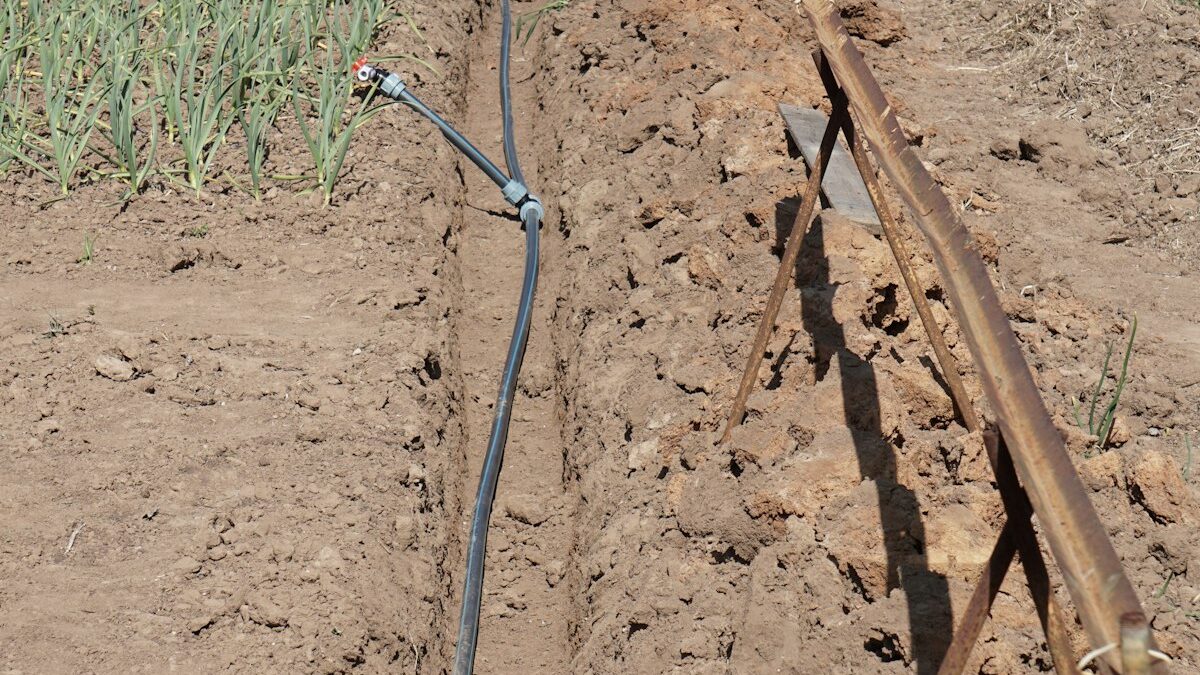
The question that comes up right after "how much soil" is "do I really need drip irrigation for two raised beds," and the honest answer is no, you don't, a watering can works fine on two beds. But if you've missed a hand-watering day during a heat wave and watched tomatoes blossom-end-rot their way through a week of inconsistent moisture, you already know why people bother. This is the exact parts list we used to put drip irrigation on two 4x8 beds for right around $90, no landscaping crew, no manifold of valves, just the minimum setup that actually works.
What you don't need, for two beds
Most drip irrigation guides are written for someone irrigating a quarter acre, and it shows in the parts lists: multi-zone controllers, backflow preventers rated for municipal code, manifolds with four or six valves. For two raised beds fed from an outdoor spigot, you need exactly one zone, one timer, and enough tubing to reach both beds. Skip anything described as "commercial grade" or "multi-zone" when you're pricing parts — that's where beginner budgets quietly triple.
Supplies
This is the full list, with the prices we actually paid, for a run from one spigot to two beds roughly 15 feet apart.
- FlowLine 1/2-inch mainline tubing, 50 ft roll1 roll$14.99
- FlowLine 1/4-inch drip line, 50 ft roll2 rolls$9.99 ea
- AquaRoot battery timer, single zone1$24.99
- Pressure regulator + filter combo1$9.99
- Hose-thread tee and end-cap fitting kit1 kit$7.99
- 6-inch landscape stakes, pack of 251 pack$6.99
- Hole punch tool1$5.99
Why the pressure regulator isn't optional
This is the part beginners skip to save $10, and it's the part that causes the most "my drip line exploded off the fitting" posts in this forum. Residential spigot pressure usually runs 40–60 psi; drip emitters are rated for 15–30 psi. Without a regulator, you'll either blow fittings off under pressure or get wildly uneven flow between emitters near the spigot and ones at the far end of the line. The filter half of the combo matters almost as much — well water or older plumbing can carry enough sediment to clog 1/4-inch emitter openings within a season.
Laying it out
Run the 1/2-inch mainline from the spigot (through the regulator and filter first) to a point between your two beds, then tee off into a loop of 1/4-inch drip line around the inside perimeter of each bed, about 3 inches in from the frame. Punch emitter holes every 12 inches along the loop — for two 4x8 beds that's roughly 20 emitters per bed. Stake the line down every few feet so it doesn't float up when the soil's wet, and cap both ends of each loop so the line pressurizes evenly instead of just dribbling out the far end.
- Keep the mainline on the surface or buried an inch under mulch — you don't need to trench it for a seasonal setup.
- Leave a little slack in the drip loops; soil settles over the season and a too-tight loop can pull an emitter out of position.
- Test the whole run before you stake everything down permanently — it's much easier to fix a leaking tee while the line is still loose.
Zone and season: how long to run it
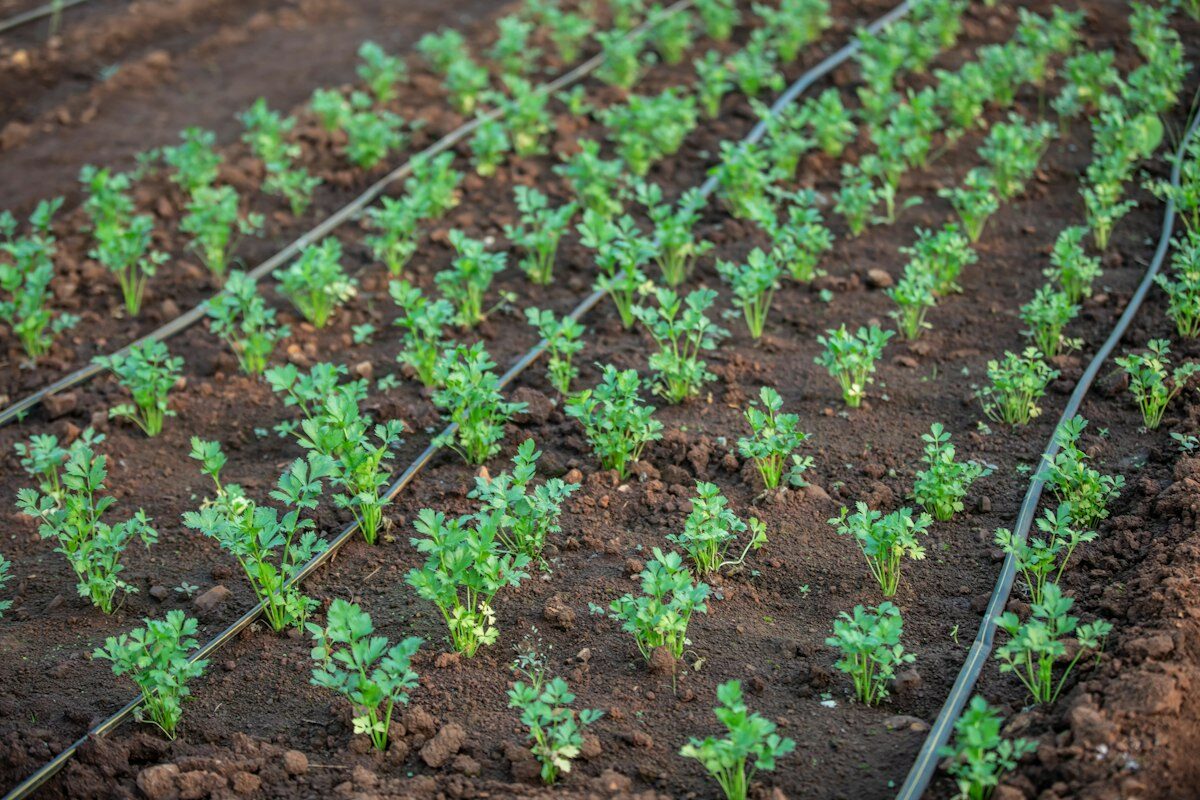
Drip run times depend more on your soil and your climate than your zone number exactly, but zone is still the fastest starting point if you've never set a timer before. Start here and adjust by feel after a week.
| Zone | Early season (cool) | Peak summer |
|---|---|---|
| 3–4 | 20 min, every 3 days | 30 min, every other day |
| 5–6 | 20 min, every 3 days | 35 min, daily in heat waves |
| 7–8 | 15 min, every other day | 30 min, daily |
| 9–10 | 15 min, daily | 30–40 min, daily |
Troubleshooting a new system
Almost every "my drip irrigation isn't working" post in this forum traces back to one of three things, and it's worth checking all three before you assume a part is defective. First, uneven flow across the bed — emitters near the spigot spraying hard while ones at the far end barely drip — almost always means the pressure regulator is missing or undersized, not a bad run of tubing. Second, a clogged emitter usually isn't actually the emitter; it's sediment that got past the filter, which is the strongest argument for not skipping that $10 part even if your water looks clean. Third, and the one that catches people in their second season rather than their first, is a line that's sprung a pinhole leak from a UV-degraded fitting; cheap plastic tees and connectors left in direct sun for a full season sometimes get brittle enough to crack, which is a good argument for routing fittings under a bit of mulch where you can.
If you're troubleshooting blind, the fastest diagnostic is to run the system with the end caps off for thirty seconds before you cap them — strong, even flow out of every open end tells you the mainline and regulator are fine, and the problem is downstream in the emitters themselves.
Shop the list
- FlowLine Drip Line Starter Roll1/4″, 50 ft · $9.99Shop drip line
- AquaRoot Battery TimerSingle zone · $24.99Shop timer
- Pressure Regulator + Filter Combo15–30 psi · $9.99Shop regulator
- Hole Punch ToolFor 1/4″ drip line · $5.99Shop tool
What we'd add next
The one upgrade we're actually considering for next season is a second timer zone, not because the $90 setup doesn't work, but because our two beds get different afternoon shade and want different run times. Everything else on this list is staying exactly as is — it's held up through a full season without a single blown fitting since we added the pressure regulator.